Knowledge Base

Film Defects Handbook

An interactive resource based on OST 19-147-83, "Film Materials. Defects. Terms and Definitions": a lighting comparison, examples of real defects, and a full searchable glossary of terms.

Inspection Lighting

Directional and Diffuse Lighting

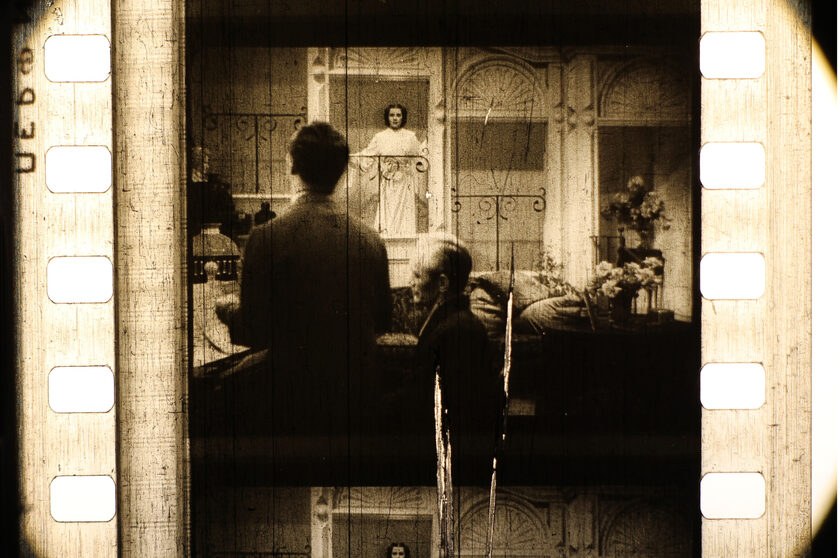
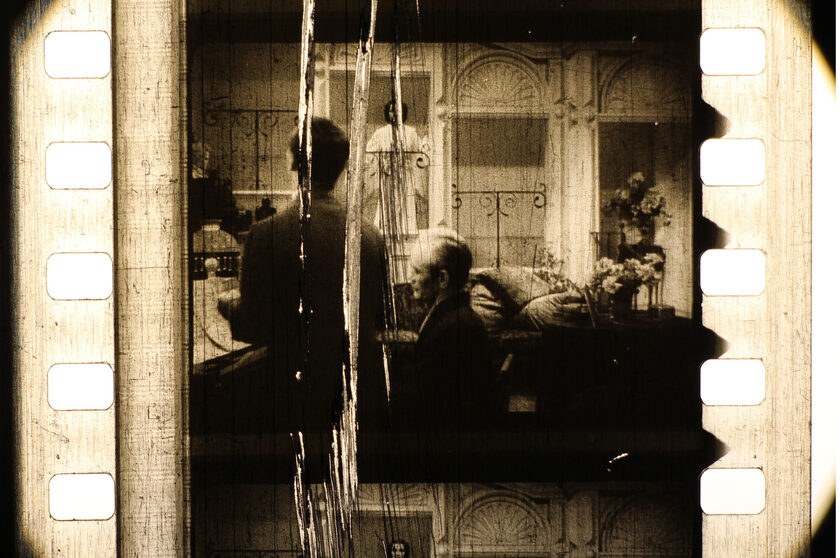
The same black-and-white positive frame looks different under different lighting: directional (raking) light reveals surface scratches through glare, while diffuse light almost hides them. Drag the handle in the center to compare.
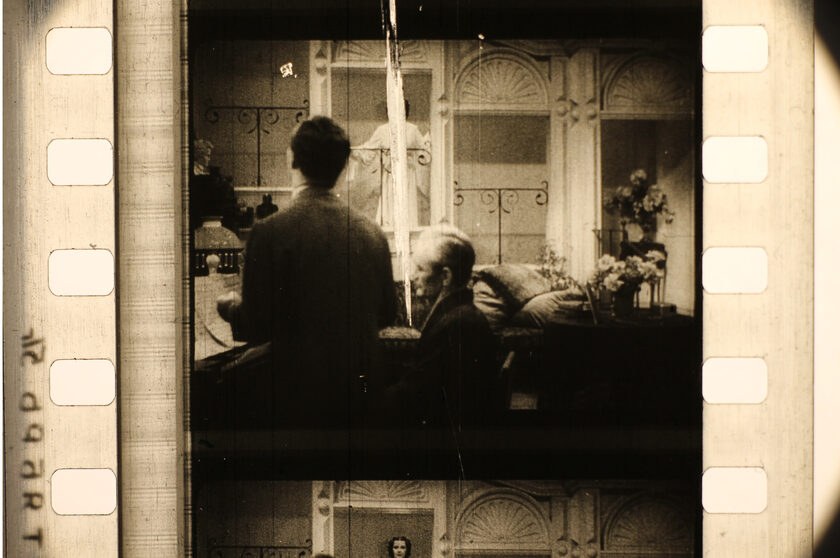
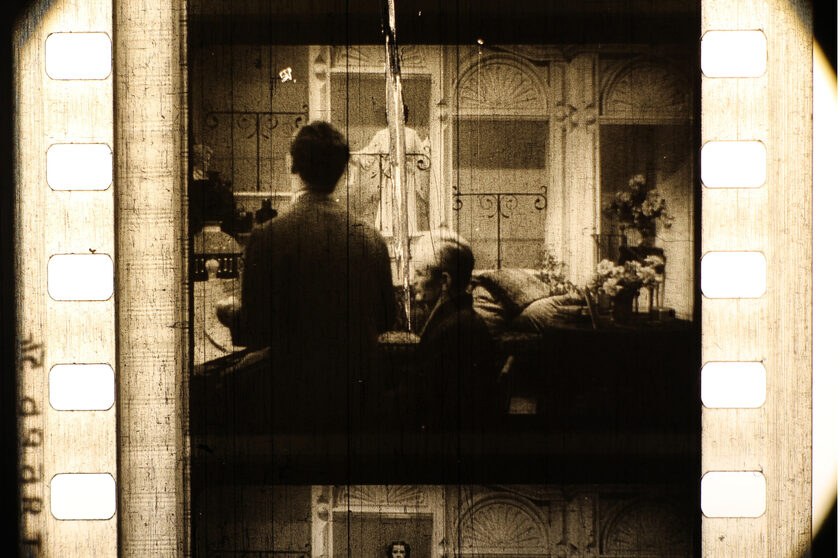
Directional Diffuse Frame under diffuse lighting — the scratch is barely visible
Frame under directional lighting — a bright longitudinal scratch is visible

Sample No. 1: longitudinal scratch on the emulsion layer
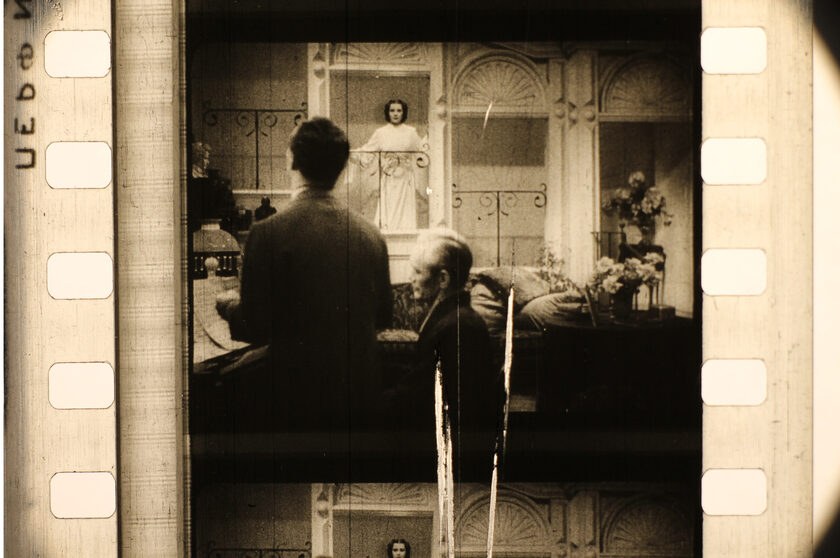
Directional Diffuse Frame under diffuse lighting — the scratches are barely visible
Frame under directional lighting — bright vertical scratches are visible

Sample No. 1: a group of vertical scratches
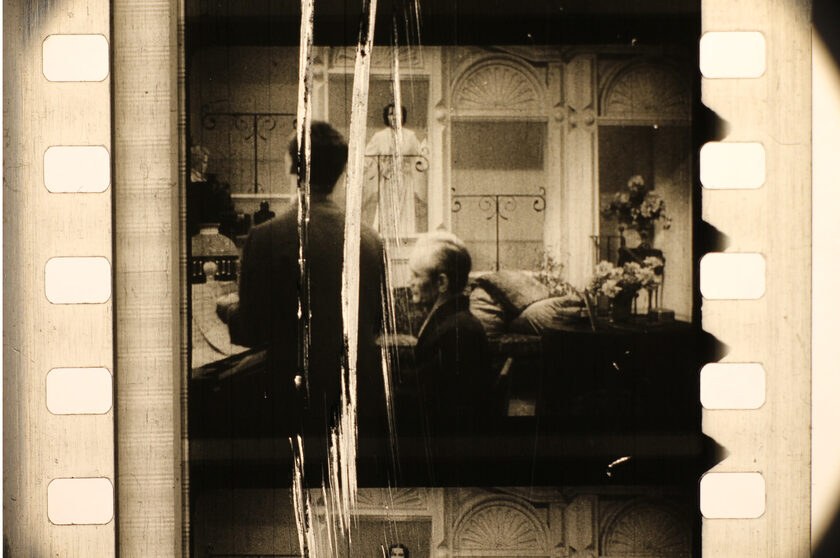
Directional Diffuse Frame under diffuse lighting — the scratches are barely visible
Frame under directional lighting — deep scratches are visible across the full frame height

Sample No. 1: deep scratches across the full frame height

Shots were taken with the emulsion side facing the lens and the base side facing the light source, at aperture f/8 and shutter speeds of 1/1600 and 1/125.

Sample No. 2

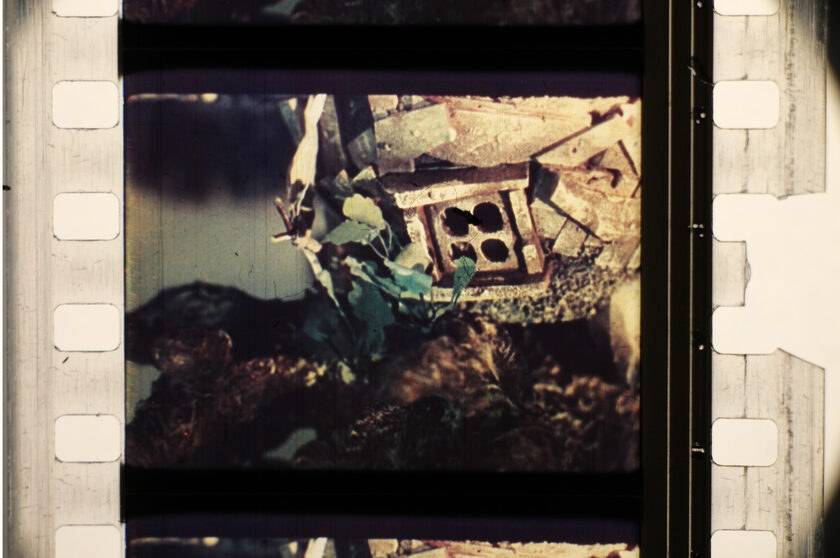
Defect Examples on Color Positive Film

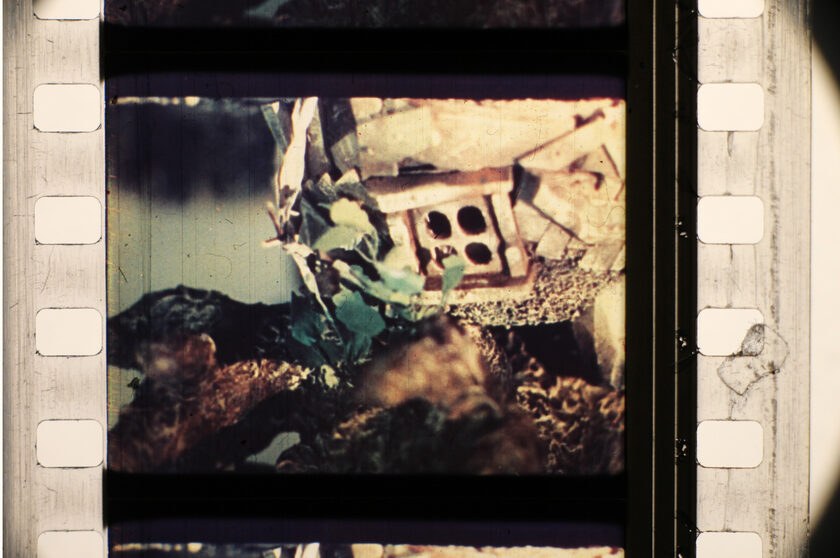
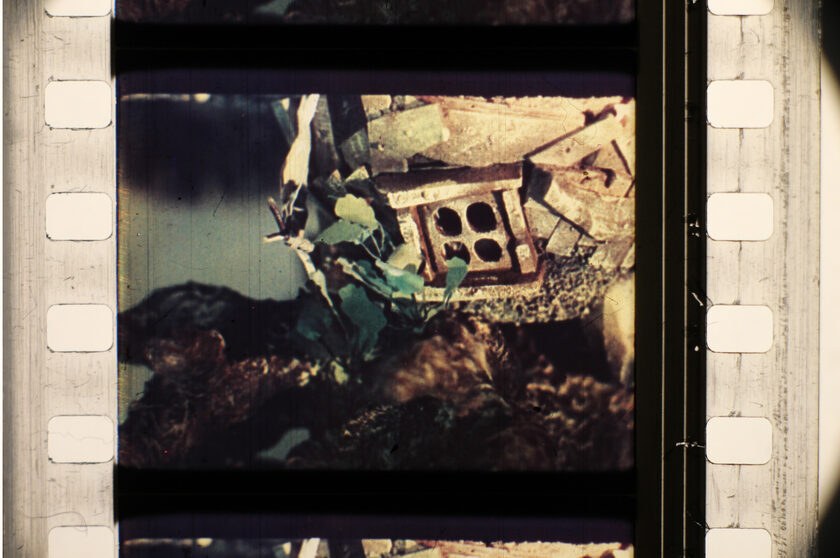
Color positive film with an optical soundtrack: perforation nicks, notches and tears, a perforation row break, scratches, a splice, and fading. Shot at aperture f/8, shutter speeds of 1/250 and 1/160.
Glossary

Full List of OST 19-147-83 Terms

Three sections of the standard: photographic defects, technical defects and sound defects. Use the search box to quickly find a term — for example "scratch" or "perforation".

Section 1. Photographic Defects

1.1.1 Color Rendition Distortion
1.1.1.01 Monochrome distortion
1.1.1.02 Two-color distortion
1.1.1.03 Incomplete colorImage is tinted in only one or two primary colors
1.1.1.04 FadingRed-brown and orange-brown tones predominate
1.1.2 Density Distortion
1.1.2.01 Uniform density distortion
1.1.2.02 Reduced density
1.1.2.03 Increased density
1.1.2.04–17 Density non-uniformitiesBreathing, flicker, mottling, within-frame and shot-to-shot density variation, sensitization/desensitization bands, uneven coating
1.1.3 Increased Fog
1.1.3.01 Dichroic fogSpots that appear reddish in transmitted light and yellow in reflected light
1.1.3.02 Spontaneous panchromatization
1.1.4 Contrast Distortion
1.1.4.01 Increased contrast
1.1.4.02 Reduced contrast
1.1.5 Structural / Sharpness Distortions
1.1.5.01 UnsharpnessBlurred outlines with loss of fine detail
1.1.5.02 Sharpness breathing
1.1.5.03 HaloBlurred outlines around brightly lit objects
1.1.5.04 Increased graininess
1.1.6 Complex Distortions
1.1.6.01 Degradation
1.1.6.02 Photographic non-uniformity between reels
1.1.6.03 Splice-adjacent photographic non-uniformity
1.1.6.04 Photographic non-uniformity from reprinting
1.1.6.05 Processing machine stoppageAlternating over- and under-developed sections
1.2.1 Parasitic Images
1.2.1.01 Double photographic image
1.2.1.02 Image dragAn unsharp, elongated outline
1.2.1.03 Foreign object in shot
1.2.1.04 Print-through of debrisA “speck” or “fringe”
1.2.1.05 Print-through of dust
1.2.1.06 Print-through of oilA blurred spot
1.2.1.07 Print-through of lens contamination
1.2.1.08 Image fogging (light exposure)Full, partial or edge exposure
1.2.1.09 Splice-adjacent light exposureNear a splice
1.2.1.10 Electrostatic discharge marksBranching lines or a chain of spots
1.2.1.11 Light flareA spot with indistinct edges
1.2.1.12 Newton's ringsConcentric rings
1.2.2 Spots, Streaks and Deposits
1.2.2.01 Chemical-photographic solution spots
1.2.2.02 Air bubble marksChains left by air during processing
1.2.2.03 Deterioration spotsYellow or brown coloring
1.2.2.04 Directional development streaks“Pillars” or “torches”
1.2.2.05 Developer streaks“Runs” or “drips”
1.2.2.06 Friction streaksLoose winding
1.2.2.07 CometA point with one or two tails
1.2.2.08 Hardness saltsA white matte deposit
1.2.2.09 Silver bloomA faint metallic sheen
1.2.2.10 Incomplete fixingA milky deposit
1.2.2.11 Incomplete bleachingA silver deposit
1.2.2.12 Incomplete removal of the anti-halation layer
1.2.3 Geometric Characteristic Defects
1.2.3.01 Photographic image instability
1.2.3.02 Frame instabilityRelative to the perforation
1.2.3.03 Tilted horizon“Listing”
1.2.3.04 Photographic image shift
1.2.3.05 Viscous developer track (VDT) shift
1.2.3.06 Sound sync error
1.2.3.07 Mirrored photographic imageFlipped left-to-right
1.2.3.08 Mirrored VDT placementOn the silent side
1.2.3.09 Photographic image substitution
1.2.3.10 Leader substitution
1.2.3.11 False matteShadowing from a screening object
1.2.3.12 Photographic image croppingA light band
1.2.3.13 Short edited shot
1.2.3.14 Non-standard VDT width
1.2.3.15 Extra photographic image
1.2.3.16 Missing photographic image
1.2.3.17 Missing viscous developer track
1.2.3.18 Printer stoppage

Section 2. Technical Defects

2.1.1 Mechanical Damage — Through-Damage
2.1.1.01 Through mechanical damage
2.1.1.02 Perforation edge nickA crack up to 0.1 mm
2.1.1.03 Perforation edge notchA crack up to 1.5 mm
2.1.1.04 Perforation edge tearA tear over 1.5 mm
2.1.1.05 Film material tear
2.1.1.06 Perforation row break“Bite-out”
2.1.1.07 Film material breakA break across the full width
2.1.1.08 Cut-outDeliberate removal with rounded edges
2.1.1 Mechanical Damage — Surface Damage
2.1.1.09 Surface mechanical damage
2.1.1.10 ScratchesNon-printing or printing
2.1.1.11 Through scratchAll the way through the layer
2.1.1.12 Cutting scratchThrough the layer and into part of the base
2.1.1.13 Dry scratchSharply defined edges
2.1.1.14 Wet scratchRagged edges
2.1.1.15 Curled scratchSmoothed edges
2.1.1.16 Roller markA longitudinal ribbed track
2.1.1.17 AbrasionMinor damage resembling matting
2.1.1.18 NickingShort, sharp scratches
2.1.1.19 GougeA stripped section of the layer
2.1.1.20 Lashing damageAt reel ends
2.1.1.21 Wet nickingOf a swollen layer
2.1.1.22 Subtitle matrix mark
2.1.1.23 Sub-layer mechanical damageVisible only in transmitted light
2.1.2–2.1.3 Brittleness and Shrinkage
2.1.2 Increased brittlenessReduced impact strength
2.1.3 Excessive shrinkageShrinkage exceeding tolerance
2.1.4 Flatness Defects
2.1.4.01 FoldA clearly defined crease
2.1.4.02 DentPressed-in points or short streaks
2.1.4.03 Sprocket tooth marksA chain of dents
2.1.4.04 Perforation edge crumplingRaised perforation
2.1.4.05 Film material crumpling“Salad” (curling/buckling)
2.1.4.06 Excessive cross-curl
2.1.4.07 Excessive longitudinal curlCoiling into a spiral
2.1.4.08 WarpingIrregular buckling
2.1.4.09 Edge stretchingA wave-like distortion
2.2.1 Surface Damage
2.2.1.01 Pitting of the photographic layerDepressions resembling spots
2.2.1.02 Photographic layer blocking (sticking)Glossy spots
2.2.1.03 Runs near the perforation“Perf-runs”
2.2.1.04 Under-glazingPoor gloss finish
2.2.1.05 Halos around the perforation“Perf-halos”
2.2.1.06 Under-mattingPoor matte finish
2.2.1.07 Base mattingMatted areas
2.2.1.08 Contaminated splice
2.2.1.09 Splice markA wide transverse band
2.2.2 Reduced Adhesive and Cohesive Strength
2.2.2.01 ReticulationWave-like ridges and valleys
2.2.2.02 Contour distortionSlippage during drying
2.2.2.03 Photographic layer delaminationComplete, edge, or localized
2.2.2.04 Photographic layer blisteringBurst blisters
2.2.2.05 Lacquer coating cracks
2.2.2.06 Magnetic layer shedding
2.2.2.07 Weak spliceA fragile splice
2.2.3 Imbibition Image and Subtitle Distortions
2.2.3.01 Uneven coloring of the imbibition image
2.2.3.02 Uneven coloring of the color-separation matrix
2.2.3.03 Lateral dye diffusionBlurred outlines
2.2.3.04 Subtitle “boiling”Subtitle “jitter”
2.2.3.05 Subtitle character melting
2.2.3.06 Subtitle character under-printing
2.2.4 Biological Damage
2.2.4.01 Mold growthWeb-like mold
2.3.1 Inclusions and Contamination
2.3.1.01 Inclusions in the film material
2.3.1.02 Dust contaminationHousehold or perforation dust
2.3.1.03 Oil contamination
2.3.1.04 Fingerprints
2.3.1.05 Deposit buildupHardened deposits
2.3.1.06 Debris depositDetached fragments
2.3.1.07 Glazed-in dust
2.3.1.08 Color-separation matrix contamination
2.3.2 Geometric Characteristic Defects
2.3.2.01 Color-separation image misregistration (CSM)
2.3.2.02 Floating misregistration
2.3.2.03 Subtitle sync error
2.3.2.04 Subtitle shift
2.3.2.05 Inverted subtitle
2.3.2.06 Subtitle instability
2.3.2.07 Illegible subtitle (start mark)
2.3.2.08 Start-mark shift
2.3.2.09 Perforation shiftAsymmetry
2.3.2.10 Staggered perforation offset
2.3.2.11 In-frame splice
2.3.2.12 Edge roughnessUnevenness and burrs
2.3.2.13 SaberingDeviation resembling a saber's curve
2.3.2.14 Non-standard splice
2.3.2.15 Subtitle too short to read
2.3.2.16 Oversized start markEncroaches on the image
2.3.2.17 Base streaksLocalized thickening
2.3.2.18 Start-mark errorNumber repetition or skipping
2.3.2.19 Extra splice

Section 3. Sound Defects

3.1 Audio Signal Distortions
3.1.0.01 Increased volume
3.1.0.02 Reduced volume
3.1.0.03 Volume fluctuationA sudden level change
3.1.0.04 High-frequency boostHarsh sound
3.1.0.05 Low-frequency boost
3.1.0.06 Muffled soundInsufficient high frequencies
3.1.0.07 Playback wow/flutterSound “wandering”
3.1.0.08 Soundtrack bleed distortion
3.1.0.09 Timbral inconsistency“Mismatched timbre”
3.1.0.10 Unintelligible speech
3.2 Sound Interference
3.2.0.01 Low-frequency hum“LF hum”
3.2.0.02 Sound noiseCamera or studio noise
3.2.0.03 Impulse noiseClicks, crackle, thumps
3.2.0.04 Sound dropout

Source: OST 19-147-83, effective 08/10/1983 (for magnetic soundtracks — GOST 13699-80).

Need Help Identifying a Defect?

Describe your specific case — we'll help identify the OST term and suggest how to proceed with the material.